New Dahlia Variety Shows Promise Against Powdery Mildew
Powdery mildew disease is no stranger to plants.
Powdery mildew has been around for awhile. In fact, in 2013, researchers discovered evidence that at least one version of the fungus existed in wheat thousands of years ago in the Middle East, in what is known as humanity’s cradle of civilization. To this day, powdery mildew exists in more than 200 countries across six continents. It affects thousands of different plant species, including flowers, fruit trees, vegetable plants and grasses.
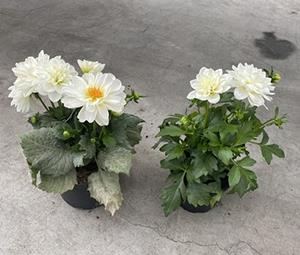 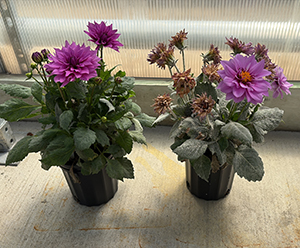
In each photo, dahlias from Selecta One (on the left) and dahlias from a Competing Variety (on the right).
There might be good news in the future, however. An exciting new series of dahlias – City Lights™ Compact – has been observed standing up to powdery mildew disease through years of trialing. We spoke with Becky Lacy, product manager at Selecta One, to learn more.
Becky Lacy (BL): We’re really excited about this new variety of dahlia, City Lights Compact. It has so much going for it. The series is a garden powerhouse, like its big brother, City Lights™. And, like City Lights, new City Lights Compact has beautiful dark leaves and wonderful blooms that attract birds and butterflies.
What do the blooms look like?
BL: I think they’re gorgeous. Anyone who likes the dahlia’s classic shape will like the flowers of City Lights Compact. The varieties are Scarlet, Magenta and Sunny Yellow. And, against its dark, dramatic leaves, those rich colors look extra amazing.
What are the benefits of these compact plants?
BL: Their compact size makes them perfect for cart programs. At retail, tall dahlias can get overlooked by consumers when the plants are placed on the upper shelves. On the other hand, the habit of City Lights Compact lets them fit easily in a cart. There’s another benefit to plants being compact, and it relates to the price of gasoline and diesel fuel. Simply put, the more compact the habit, the more plants that growers can fit in a truck.
What other new series of dahlias are just as impressive and eye-catching?
BL: Yes, last year we launched Venti™ PinkBurst, a truly unique-looking dahlia. The flowers on PinkBurst have a large, anemone-like flower pattern, similar to the bold, red-and-yellow petal pattern of Venti FireBurst. These dahlias are so exotic looking. Consumers love them.
Last year, we also debuted our Dalaya® Lace series. The Lace varieties have a more classic-looking petal pattern, but with a twist. The four varieties – Pink Lace, Purple Lace, Red Lace and Yellow Lace – all have just a touch of white on the tips of their petals.
Tell us about your hope for City Lights™ Compact being resistant to powdery mildew disease.
BL: Powdery mildew fungi are very common plant pathogens that display a tell-tale white or grayish, dust-like coating on leaves, stems and flowers, making the plant look like it has been sprinkled with flour. While powdery mildew typically does not immediately kill the plants that it lands on, the disease certainly weakens the plants by blocking sunlight and extracting nutrients. The infected leaves, shoots and buds turn yellow, wither and die off.
The ideal environment for powdery mildew is one with high humidity, usually during warm days and cool nights, so there are plenty of opportunities in the U.S. – from spring through fall – for mildew to show up. It especially likes areas with limited airflow, and it can seem to arrive quite suddenly. Plants in a greenhouse might look fine, but when you look closer and turn a pot around, you’ll notice mildew on the leaves.
Did you say fungi? How many powdery mildews are there?
BL: All together, there are many powdery mildew fungi that can cause infection in a wide host range. In dahlia alone, there are at least five different powdery mildew fungi.
How exactly does powdery mildew “show up?”
BL: Powdery mildew can be prevalent throughout the environment. The fungus produces millions of spores that circulate constantly in the air during growing season. In the winter, the fungi can survive as spores or mycelia in leaf and plant debris on the ground or in dormant, infected plants. In some cases, there is host specificity, meaning a powdery mildew that infects verbena will not infect squash.
Is there good news about the new dahlia variety and powdery mildew?
BL: Yes, we are very excited about this! We’ve done years of trialing on new City Lights Compact – just like the trials we perform with every other new variety – to ensure it’s ready for consumers. It’s not unusual for new-variety trialing to last up to 10 years. We have observed powdery mildew resistance in City Lights Compact during this process.
Add this new series of dahlias to your next program! For more information, visit our Dahlia-specifc page where growers can learn about these and other varieties from Selecta One.
|